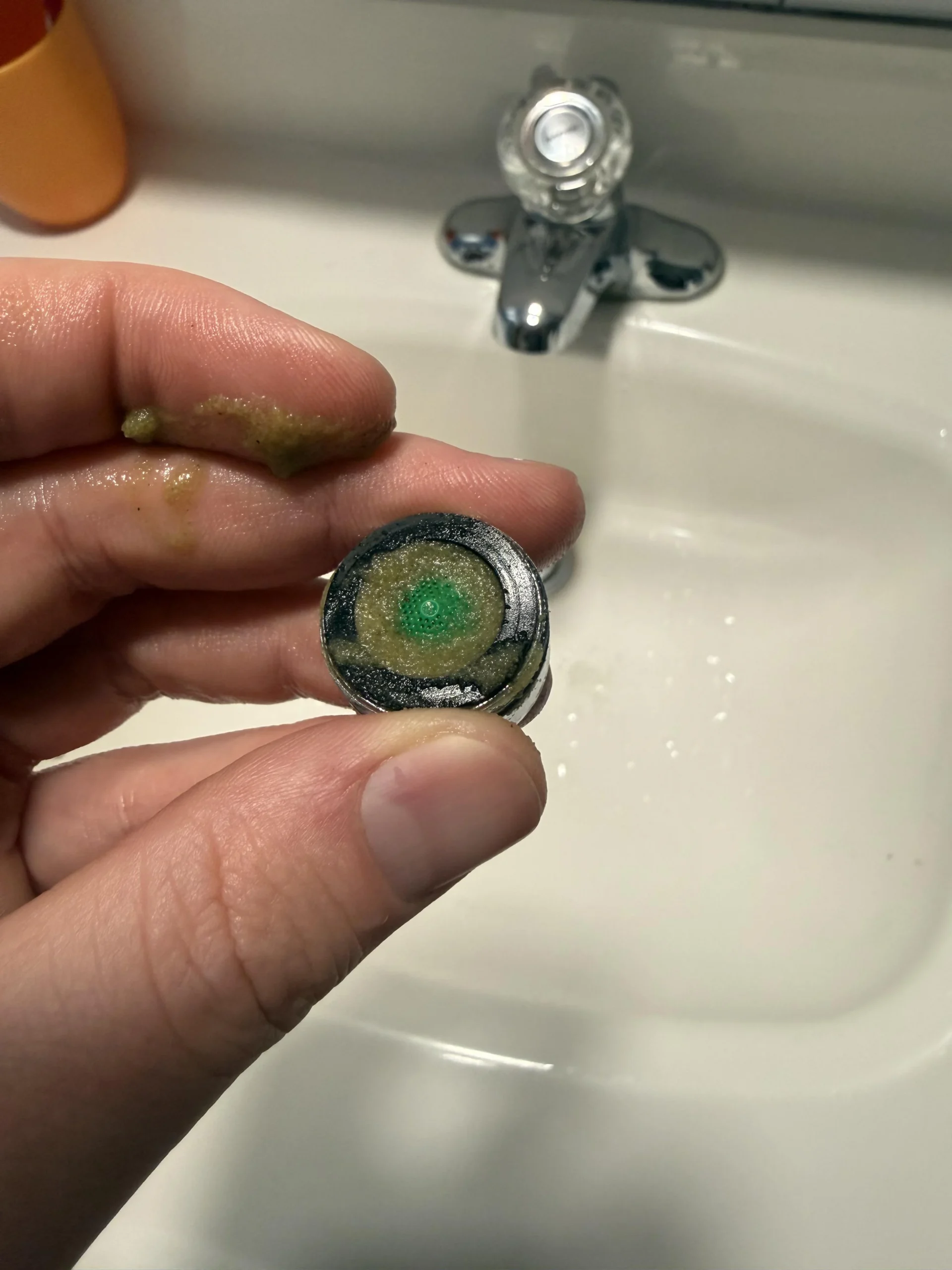
Most residents never see the inside of their faucet’s aerator until the water pressure drops to a trickle. However, that small mesh screen is the most valuable diagnostic tool in your home. The grit, silt, and flakes trapped in your aerator are a “technical history book” of your building’s recent plumbing events. At Know Your Tap, we believe that aerator analysis is the fastest way to determine if you need to call a plumber or the city. Understanding what your sediment is telling you is a vital part of apartment utility education. The screen is the storyteller of the pipe. Don’t ignore the message in the mesh.
Reading the “Colors” of Decay
The color of the sediment in your aerator provides an immediate clue to the source of the problem. **Reddish-Orange flakes** are a sign of oxidizing iron, usually from aging galvanized pipes in your building’s risers. **White, hard crystals** are calcium carbonate, indicating “hard water” mineral buildup or a failing hot water heater. **Black, rubbery specks** that smear when touched are the internal liners of your “flex lines” or gaskets dissolving from the inside out. Finally, **fine, sandy grit** often indicates a recent water main repair in the street that pushed city-side sediment into your home. This is a classic material identification event. Color is the primary indicator of provenance. The rainbow of grit is the map of your infrastructure.
The Texture Factor: Flakes vs. Sludge
The physical texture of the sediment reveals the *age* and *velocity* of the issue. Large, jagged flakes of rust indicate that your pipes are in a state of “brittle decay”—where the internal tuberculation is physically breaking off. Fine, muddy sludge indicates a “stagnation failure,” where the water is moving so slowly that it allows fine particles to settle and form a biofilm. At Know Your Tap, we use these textures to help residents determine if their water issues are “chronic” (always there) or “episodic” (happens after construction). Understanding infrastructure dynamics helps focus your maintenance efforts where they matter most. Texture is the tactile evidence of infrastructure health. Sludge is a warning; flakes are a crisis.
The Role of Metallic “Shrapnel”
In some cases, you might find actual metallic grains in your aerator. This “shrapnel” often comes from a failing water main tap or a plumber who didn’t properly flush the line after a repair. These metal shards can act like a “buzzsaw” inside your faucet, slicing through the delicate rubber O-rings and causing permanent leaks. If you find metallic grit, you must flush your entire home’s plumbing from a high-flow bathtub fixture to clear the line before your expensive faucets are ruined. At Know Your Tap, we believe that localized mitigation is the only way to protect your modernization investment. Metal grit is the most dangerous form of aesthetic contaminant.
Aerators and Biofilm Growth
Aerators aren’t just sediment traps; they are ecosystems. The mesh screen provides an ideal surface for the growth of “biofilm”—a community of microscopic bacteria and fungi that feed on the carbon in the water. If your aerator is filled with a “slippery” or “slimy” material, this is likely why your water has a musty or earthy odor. Boiling water won’t always fix this; only a physical cleaning and a vinegar soak will. This is a primary topic in our urban water FAQ and is documented as a primary cause of point-of-use odors. Your aerator is the final filter before your glass—don’t let it become a source of contamination. The biological health of your tap starts with the screen. A slimy screen is a sign of stagnant life.
The Impact of “Blue-Green” Staining
Fine blue or green particles found inside a faucet aerator may indicate corrosion occurring within copper plumbing systems. These particles are often associated with copper minerals that can be released when water chemistry, electrical grounding issues, pipe conditions, or other environmental factors affect the plumbing system.
If corrosion continues over time, it may contribute to more serious issues such as pinhole leaks, damaged plumbing components, and changes in water quality. While small amounts of discoloration or particles may seem minor, they can serve as an early warning sign that the plumbing system requires further evaluation.
Identifying the source of corrosion is important for protecting both water quality and building infrastructure. Water testing for healthcare facilities in NYC can help detect copper and other potential contaminants, providing healthcare facilities with valuable information to protect patients, staff, and critical plumbing systems.
Professional water testing allows building managers and property owners to understand whether concerns are related to plumbing materials, water chemistry, or other environmental factors. Early detection can help prevent larger maintenance issues and support safer, more reliable water systems.
The “Pressure Drop” Diagnostic
If cleaning the faucet aerator restores normal water pressure, the issue was likely limited to the fixture itself. Mineral buildup, sediment, or debris trapped inside the aerator can restrict flow and create noticeable pressure changes. However, if pressure remains low after cleaning, the restriction may be located deeper within the plumbing system, such as a valve, pipe section, or branch line.
This simple before-and-after check can help residents identify whether a problem requires basic fixture maintenance or professional plumbing assistance. By testing the fixture first, homeowners can avoid unnecessary service calls and better understand the possible source of the issue.
However, pressure checks only evaluate water flow and cannot determine whether contaminants are present. Water quality concerns require laboratory analysis. Manhattan lead testing specialists can analyze water samples to identify whether aging pipes, fixtures, or plumbing materials are releasing lead into the water supply.
Combining basic troubleshooting with professional water testing provides a more complete understanding of both plumbing performance and water safety. This approach helps residents address visible issues while also identifying hidden risks that may not be detectable through pressure or appearance alone.
Conclusion
Your aerator is not just a part; it’s a window. By recognizing the role of color, texture, and biofilm, you can diagnose your home’s plumbing issues from your own kitchen counter. Know your grit, know your pipes, and always Know Your Tap. The small things in your faucet reveal the big things in your building. At Know Your Tap, we help you see the science in every grain of sediment. Your faucet is a technical laboratory—let’s use it for your family’s health. A bit of maintenance goes a long way toward total clarity.